


When Handling Mistakes Become a Farm Performance Problem
When a farm experiences a staff injury, reduced milk yield, or slower weight gain, handling methods are rarely the first suspected cause. Managers often blame a difficult animal, poor weather, or an undefined human factor. In practice, the cause may be more specific.
A handler may enter an animal’s flight zone too quickly, apply pressure at the wrong moment, or fail to recognise early signs of stress. Good stockmanship is not an innate ability or simply a talent for working with animals. It is a set of observable and trainable stockmanship skills based on animal behaviour, timing, positioning, and controlled movement.
Professional stockmanship standards help workers understand why animals react in certain ways. They also provide repeatable animal handling techniques that can be demonstrated, assessed, and improved through training.This article explains how skilled stockmanship differs from ordinary handling, how natural behaviour shapes livestock movement, and what employers should observe when assessing farm staff.
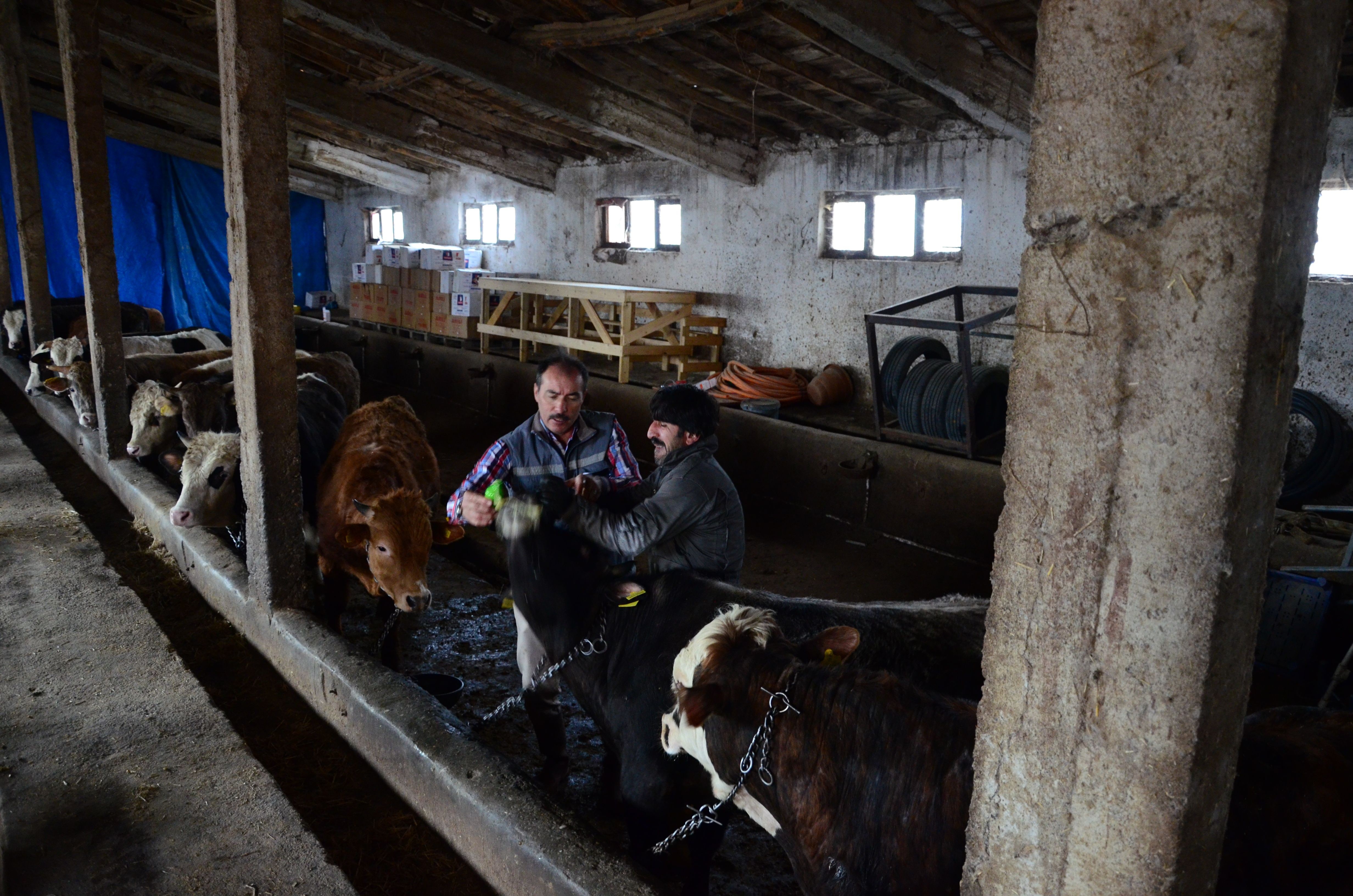
Image source: Two Farmers Handling Cattle in a Barn — Pexels
How Skilled Stockmanship Differs from Ordinary Animal Handling
Stockmanship is a systematic approach to the management of livestock. It is based on animal behaviour rather than attempts to overpower, frighten, or out-shout an animal. Ordinary handling often depends on instinct, physical strength, or the experience of one worker. Skilled stockmanship relies on shared methods that can be applied by the whole farm team.
The difference is not measured by one successful movement of a group. It becomes visible in how calmly and predictably animals respond to a handler over time.A trained worker considers position, speed, body angle, available space, and the animal’s likely reaction. These factors shape movement before direct physical contact becomes necessary.
This approach supports animal welfare and improves consistency across shifts. It also reduces dependence on individual personality or confidence.
Reactive vs. Proactive Approach: What’s the Difference?
A reactive handler acts after a problem has already appeared. The animal stops, turns, or becomes agitated, and the worker responds by increasing pressure.
A proactive handler observes early signals and adjusts before the situation escalates. The table below shows how these approaches affect animals and farm operations.
|
Approach |
Typical handler behaviour |
Consequence for the animal or farm |
|
Reactive |
sudden movements, raised voice, head-on pressure, and continued pressure after the animal reacts |
panic, congestion in alleys or races, increased stress, and a higher risk of injury |
|
Proactive |
observation of body language, gradual pressure, correct positioning, arc-based movement, and timely release |
calm movement, fewer stoppages, safer handling, and more stable production |
The main difference is timing. Reactive handling tries to restore control after it has been lost. Proactive handling prevents the loss of control by responding to the animal’s behaviour early.
How Skilled Stockmanship Affects Daily Metrics
Strong stockmanship skills influence measurable farm results. The effects become clearer when the same handling methods are used consistently across teams and shifts.
The main operational benefits include:
-
fewer staff injuries, because predictable movement reduces the risk of kicks, falls, crushing incidents, and panic charges;
-
lower animal stress levels, because calm handling limits repeated fear reactions and unnecessary physical effort;
-
higher production metrics, because animals under less chronic stress can maintain steadier milk yield, weight gain, feed intake, and reproductive performance;
-
less infrastructure damage, because calm animals are less likely to break gates, fences, pens, or race equipment.
These results show that stockmanship is an operational competency rather than an optional soft skill. Better handling can support animal welfare, staff safety, and farm performance at the same time.
How Natural Animal Behaviour Determines the Rules of Stockmanship
Safe animal handling techniques follow the way livestock perceive space, movement, pressure, and possible threats. They are not an arbitrary set of instructions. These principles were formalised by animal behaviourist Temple Grandin, whose flight-zone and point-of-balance framework is now the standard reference for low-stress livestock handling worldwide.
The flight zone and point of balance are two of the most important concepts in the handling of cattle, pigs, and other livestock.
The flight zone is the personal space around an animal. When a handler enters this area, the animal usually moves away. The size of the zone depends on species, temperament, breed, previous human contact, and the acclimation process. Animals with limited calm contact often maintain a larger distance from people.
The point of balance is generally located near the animal’s shoulder. A handler positioned behind this point usually encourages forward movement. A worker who moves in front of the point of balance may cause the animal to stop, turn, or move backwards. Correct handler positioning is therefore essential during sorting, loading, and movement through a race.
Herd behaviour also affects how groups move. Livestock monitor neighbouring animals, so one animal’s reaction can spread quickly through the group. A skilled handler uses this group response instead of fighting it. The worker creates movement in the leading animals and allows the rest of the group to follow.
The pressure and release principle provides the basis for this method. The handler applies controlled pressure by entering the edge of the animal’s influence zone. As soon as the animal moves in the intended direction, the handler steps back or reduces pressure. This release teaches the animal that the correct response removes the source of pressure.
Consistent use of this principle supports fear response reduction. It also contributes to trust building with stock during repeated handling. Continuous pressure has the opposite effect. It can strengthen the animal’s predator perception of the worker and make future handling more difficult.
The Flight Zone: What It Is and How to Use It in Practice
The size and shape of the flight zone vary between species and individual animals. A worker must observe the animal rather than assume that one distance works in every situation.
In cattle, the flight zone is often influenced by the frequency and quality of human contact. A dairy cow handled calmly during milking may allow a close approach. Young cattle or animals with limited human contact may begin moving while the handler is still several metres away. The worker should identify that distance before applying more pressure. For example, a handler can approach a group along a curve rather than walking directly towards the animals. A small step into the zone encourages movement. When the cattle begin walking in the intended direction, the handler steps back. This sequence creates low-stress movement without forcing the group to run.
Pigs may have a smaller flight zone, but they can react sharply to sudden entry. Noise, shadows, unfamiliar surfaces, and pressure from several directions may disrupt their movement. A handler moving pigs should provide a visible route and avoid standing directly in front of the group. Parallel movement can guide the animals while allowing them to maintain forward focus.
Working near the edge of the zone is more effective than remaining deep inside it. Skilled handling uses small adjustments instead of continuous force.
Mistakes When Moving Animals: What Happens When the Zone Is Violated
Poor positioning can quickly turn routine movement into a dangerous situation. Problems often arise when a handler focuses only on the destination and ignores how the animal interprets pressure.
Common mistakes include:
-
entering deeply and suddenly into the flight zone, which gives the animal little time to select a safe direction;
-
standing in front of the point of balance while trying to move an animal forward, which can cause stopping or turning;
-
using loud noises or abrupt gestures, which increases arousal and can spread fear through the group;
-
applying pressure from several directions, which removes a clear route and may cause unpredictable movement.
These mistakes rarely save time. They often create blocked races, repeated handling attempts, damaged equipment, and a greater risk of injury. A calm approach technique gives the animal time to assess the route and respond. Controlled movement is usually faster than recovering from panic.
Signs of Quality Stockmanship in Day-to-Day Work
An employer or farm manager does not need specialist equipment to assess stockmanship standards. Many of the most important behaviours can be observed during an ordinary farm walk-through.
The following indicators show how good stockmanship looks in practice:
-
a calm approach technique, with the handler moving gradually rather than rushing directly towards the animals;
-
minimal shouting, with the voice used at an even level rather than as the main tool for creating movement;
-
accurate reading of bovine body language, including ear position, head position, tail movement, posture, and attention;
-
correct handler positioning, with the worker choosing a location based on the required direction of movement;
-
minimal physical force, with prods, electric goads, or direct contact treated as a last resort;
-
parallel movement and an arc-based approach, which guide animals without creating direct head-on pressure;
-
timely release of pressure, with the worker pausing or stepping back after the animal responds correctly;
-
consistent methods across shifts, so handling does not depend on one worker’s mood or personal experience.
These indicators allow managers to assess both individual performance and team consistency. Calm and purposeful animal movement is usually a sign that the handler’s signals are clear. The same principles apply during loading, sorting, pen entry, and race entry. A good mustering technique moves animals as a group without creating unnecessary separation or pressure.
The physical environment also affects handling quality. Poor pen design can undermine even an experienced worker. Sharp corners, slippery floors, sudden changes in light, and blocked sightlines can cause animals to stop. A well-designed pen or race supports the direction in which animals naturally prefer to move.
How Stockmanship Quality Affects Farm Productivity and Safety
The quality of livestock handling is directly connected to farm performance. The relationship may not appear in one daily report, but it becomes visible over time. Repeated stress can reduce feed intake, disturb resting behaviour, lower milk yield, and slow weight gain. It can also affect reproductive performance and make routine procedures more difficult. Animals can learn to associate workers, gates, pens, or races with fear. Once this association develops, ordinary tasks may require more labour and take longer to complete.
Poor handling also creates direct business costs. Staff injuries may lead to sick leave, insurance claims, treatment costs, and reduced productivity. A farm may also need extra workers to complete a task that could be managed safely by one trained handler. Damaged gates, fences, and race equipment create additional expenses.
Consistent handling methods produce calmer movement and more predictable routines. They also help new workers understand what is expected from the beginning. Stockmanship training should therefore be treated as a risk-management and productivity measure. It gives workers practical tools for managing animals without relying on force.
Bixter courses provide structured guidance on animal behaviour, the flight zone, the point of balance, pressure and release, and safe daily handling. Employers seeking to strengthen staff capability can explore Bixter’s farmer training program. The courses are designed to turn stockmanship principles into repeatable workplace practices. Candidates who want practical experience in an international farm environment can review current traineeship opportunities.
Good stockmanship can be recognised in calm animal movement, consistent handler behaviour, and safer daily routines. When these practices are taught and applied systematically, they support animal welfare, staff safety, and more stable farm performance.